Preface
An electric go kart or any EV for that matter needs a battery pack. There are a vast amount of options such as e-bike and scooter packs that can be purchased with plug and play simplicity, but they are expensive. My preference is so save money by doing things myself, realize I've made a terrible mistake and end up spending more than if I just bought a battery in the first place. Hey at least it comes with a free lesson. So this brings us to how the LifeKart battery design.
Lifepo4 vs Lithium Ion
These are the two main cell types used in the battery market today. There are some differences between these two cell types that need to be taken into account when doing any build. Without getting too much into the chemistry of it all let's breakdown the more important ones.
Voltage
The biggest parameter to consider when building a battery pack is the voltage differences. Below are general stats for each cell type.
- Lifepo4
- Peak: 3.5v
- Nominal: 3.2v
- Safe Drain: 2.5v
- Lithium Ion
- Peak: 4.2v
- Nominal: 3.7v
- Safe Drain: 2.8v
As seen above the voltages differ quite dramatically. One of the most notable differences is the total swing in voltage from "full" to "drained". While the Lifepo4 cells swing at most 1V the Lithium Ion cells can swing as much as 1.4V. That's a 40% difference.
But why do we care? When it comes Lifepo4 and its lower voltage swing this plays a pivotal roll in longevity and safety. You have a chemistry that is less volatile and being subjected to less "action" inside which prolongs life of the cell but also is deemed safer.
Lithium Ion on the other hand while not considered "unsafe" is generally viewed as more volatile and less life span cell than its Life counterpart.
Power Output and Density
Lithium Ion is king in both of these categories. Not only can you pack more voltage into a smaller space because of the higher voltage per cell, you can also access that voltage faster and more intensely. This comes in the form of a C rating which can be read about here. For those who don't know or don't care a C rating simplified is a measure of max amperage you can take out of or put into a battery cell at any given time. Basically higher is better.
Typical Lithium Ion cells found in other EV's can have C ratings of 2, 5 or even 10C. While Lifepo4 cells average around 1C. And because the C rating is multiplied when determining max amps that means Lithium Ion cells can pump out 10 times (10C) the amount of power than a typical Lifepo4 cell.
Near all e-bike, scooter and even electric cars/trucks use Lithium Ion cells. They are simply the most power dense cells you can buy today.
Weight
Another reason you wont find Lifepo4 cells being used in EV's big and small is weight. Lithium Ion power to weight ratio is again the best we have in mainstream technology right now. We are talking 45% less weight per kilowatt average than Lifep04.
Breakdown and Result
With all of the above Lithium Ion is looking like the best choice for building anything electric that moves around. It's light, power dense and packs a wallop in terms of output. That's why I went with Lifepo4 for my battery build 🙃
Before you throw up your hands and close this tab keep reading. This build was never meant to be conventional or boring. I wanted to do something different, learn new things and solve new problems. Also, I got the cells for cheap....like really cheap, but I digress. Let's get out of battery theory and more into the build plan.
The LifeKart Battery
Last week I made my first purchase towards this project in the form of 36 Lifepo4 cells. Now why 36 you might be asking? Well the answer is quite stupid. They came in boxes of 6 and I didn't want a partial box. Also, I like to plan for failure and ordered some extras.
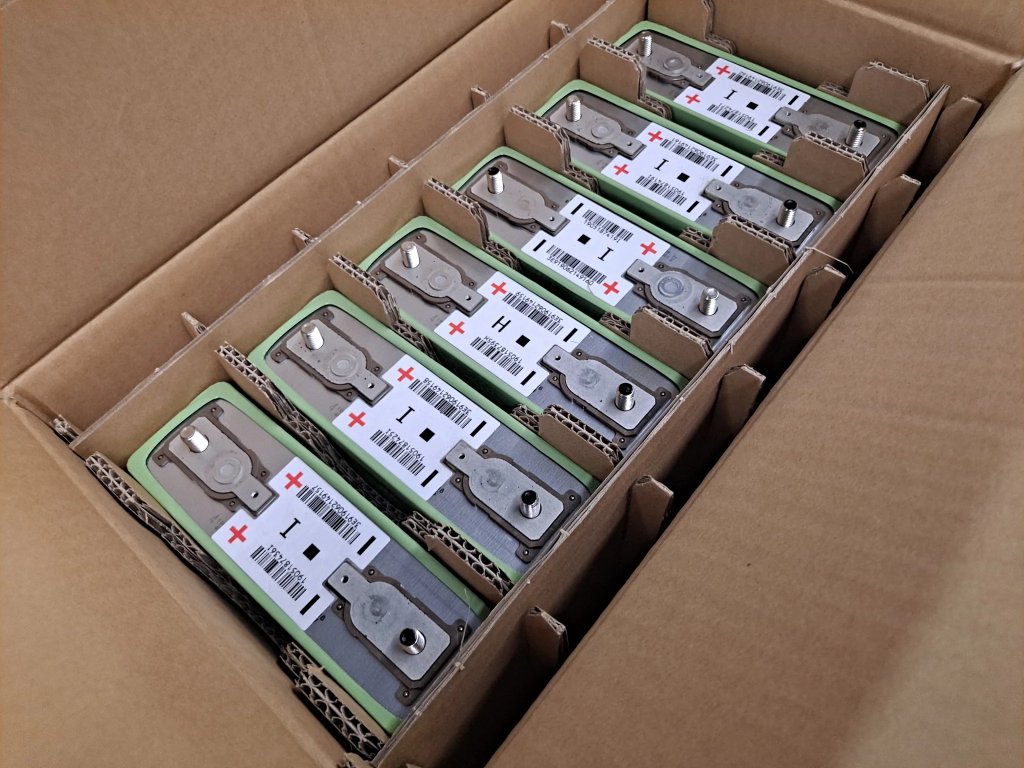
Cells and Power Output
The cells I purchased can be found here at Battery Hookup (best place to buy, no I am not affiliated): Battery Hookup
These cells were not only cheap but are also unique in a way that makes them one of the few Lifepo4 cells that would work for this kind of project. Remember the C rating? These cells can support peak C ratings of over 8C in short bursts. That is big Lithium Ion territory. All with more stable voltage and the longevity of Lifepo4. But nothing comes for free and the weight is still a downside that this build will have to manage. With the slated motor and controller combo the LifeKart should be able to overcome this added weight when it comes to performance.
Pack Assembly
A huge benefit of using Lifepo4 cells is their simplicity when building a battery pack. In the image above you can see the handy terminal posts that make connecting bus bars as simple as tightening a nut. These cells even have an extra tapped hole near the center for BMS hookups. This makes pack assembly as easy as building a box and threading everything together. No spot welding, cell holders, nickel strips, etc. Chef's kiss.
Conclusion
Hopefully this gives you more insight into the mechanics, design and strategy behind the LifeKart battery.